
Meal Timing Around Workouts: Fueling Your Performance
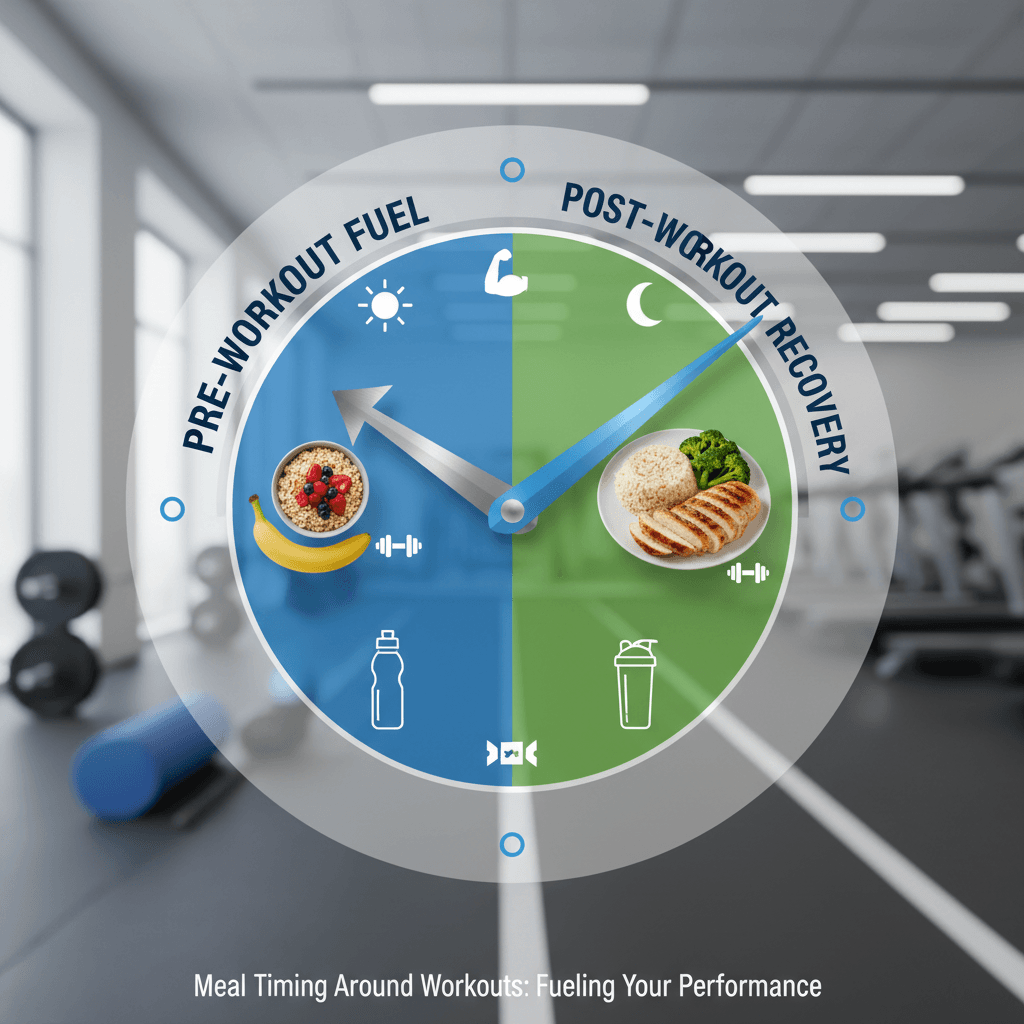
Clock face made of different foods showing pre and post workout meal timing
Key Takeaways
- The 30-minute post-workout window is largely a myth - you have several hours to refuel effectively
- Pre-workout nutrition depends on timing, intensity, and personal preference
- Total daily nutrition matters more than perfect timing for most people
The 30-minute anabolic window is a myth. You have several hours to refuel after a workout. If you've eaten before training, the window is even longer. What actually moves the needle is your total daily nutrition - timing is a supporting factor, not the lead role.
#The Pre-Workout Question
Whether you need to eat before working out depends on context:
- Within 3 hours of a meal - you're already fueled. No additional food needed for most workouts.
- Low to moderate intensity (walking, light weights, yoga) - fasted is fine.
- High intensity (HIIT, heavy lifting, long runs) - you need fuel.
Fasted training is not automatically better for fat burning. Your overall calorie balance determines fat loss - a weak, half-effort workout from lack of fuel hurts more than it helps.
#What to Eat Before Working Out
- 2-3 hours before - balanced meal with all macros (e.g. chicken, sweet potato, veggies)
- 1-2 hours before - easily digestible carbs + protein (e.g. Greek yogurt with berries); skip heavy fats
- 30-60 minutes before - simple carbs for quick energy (banana, rice cakes, dates); avoid fiber and fat
If eating before exercise makes you feel sick, don't. Some people perform better fasted. Your performance and how you feel matter more than following rigid rules.
Gear for this article
Curated tools & essentials mentioned in this guide



#The Post-Workout Window
Muscle protein synthesis stays elevated for 24-48 hours after resistance training. This is why the timing of one post-workout meal matters far less than consistent daily intake.
Within 2-4 hours post-workout:
- Aim for 20-40g protein + carbs
- Examples: chicken and rice, tuna sandwich, protein smoothie with fruit
Timing becomes critical when training again within 8 hours - eat as soon as possible to maximize recovery between sessions. If you're not training until tomorrow, relax and eat when convenient.
#Special Considerations
For weight loss - skipping post-workout food is counterproductive. You need nutrients to preserve muscle, recover properly, and avoid binge eating later.
For muscle building - consistent daily protein (0.7-1g per pound of body weight) matters more than perfect timing.
For endurance athletes - timing matters more:
- During exercise lasting >90 minutes: 30-60g carbs per hour
- Post-workout: 1-1.2g carbs per kg body weight
#Priorities (Most to Least Important)
- Total daily calories and macros
- Eating enough protein throughout the day
- Having energy for good workouts
- Post-workout nutrition within a few hours
- Pre-workout fuel if needed
- Exact timing windows
The best timing approach is the one that supports your individual energy levels, performance, recovery, and adherence to your goals - not the one that follows the most rigid rules.
Recommended Gear
Mix protein shakes for convenient post-workout nutrition on the go
Pre-packaged protein bars perfect for pre or post workout fuel
Keep your timed pre and post workout meals fresh throughout the day
Protect bananas in your gym bag for quick pre-workout energy
Portion controlled containers for timing meals around workouts
Fast-absorbing protein for muscle recovery within the post-workout window
Quick-digesting carbs for energy 30-60 minutes before training