
Fundamental Movement Patterns: Some Core Building Blocks (Push, Pull, Hinge, Squat, Rotation)
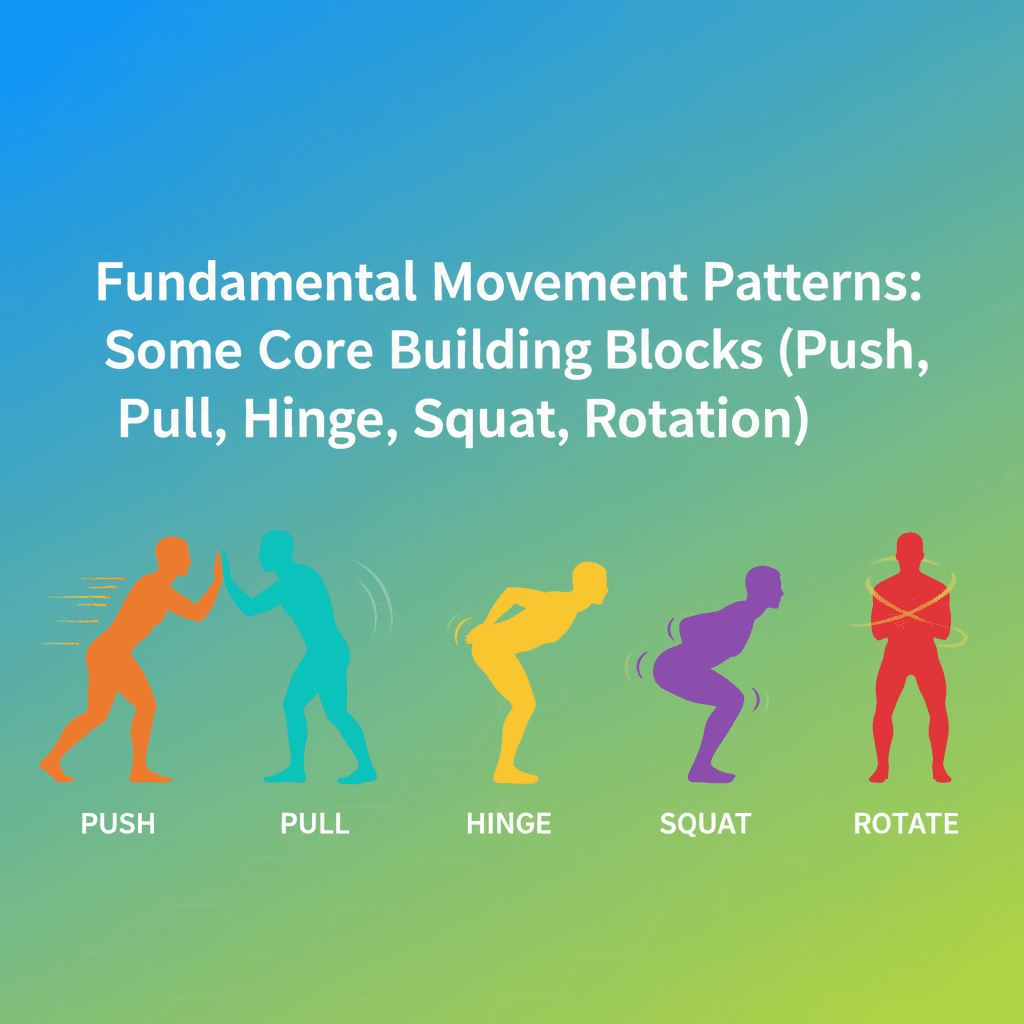
Split view showing the 5 fundamental movement patterns with silhouettes demonstrating each: push, pull, hinge, squat, and rotation
Key Takeaways
- Every exercise is built from just 5 fundamental movement patterns you already do daily
- Mastering these patterns prevents injury and improves all physical activities
- Start with bodyweight versions and focus on quality over quantity
Every exercise you'll ever do - from picking up groceries to deadlifting - is a variation or combination of five fundamental movement patterns. Think of these as your body's alphabet: master the letters and you can read any exercise.
You already use all five patterns daily. Fitness is doing them intentionally and progressively.
#The Big Five Movement Patterns
#1. Push - Moving Things Away
Any movement where you push weight away from your body or push your body away from something.
- Daily life: Pushing a cart, getting up from the floor, closing a car door
- Exercises: Push-ups (horizontal), overhead press (vertical), dips
- Primary muscles: Chest, shoulders, triceps
#2. Pull - Bringing Things Closer
Any movement where you pull weight toward your body or pull your body toward something.
- Daily life: Opening a heavy door, pulling luggage, lifting a child
- Exercises: Rows (horizontal), pull-ups/lat pulldowns (vertical), bicep curls
- Primary muscles: Back, biceps, rear shoulders
- Why it matters: Balances desk-work posture and supports spinal alignment.
#3. Hinge - The Back-Saver
Bending at the hips while keeping your spine neutral. This is the most important pattern for preventing injury.
- Daily life: Picking something off the floor, loading the dishwasher, bending to pet a dog
- Exercises: Deadlifts, Romanian deadlifts, kettlebell swings
- Primary muscles: Glutes, hamstrings, lower back
- Why it matters: Master the hinge and you'll never throw your back out picking up a pencil.
Hinge Test: Stand with your back against a wall, feet 6 inches away. Push your butt back to touch the wall while keeping your chest up. That's a hinge.
#4. Squat - Sit and Stand
Bending simultaneously at hips, knees, and ankles to lower your body. If you can squat, you can live independently.
- Daily life: Sitting down and standing up, getting in/out of a car, playing with kids
- Exercises: Bodyweight squats, goblet squats, lunges (single-leg squat variation)
- Primary muscles: Quads, glutes, core
- Note: Your knees can safely go past your toes - they do it every time you walk downstairs.
#5. Rotation - Twisting with Control
Rotating your torso while maintaining core stability. Keeps your spine healthy and prevents the "I turned wrong and tweaked something" injury.
- Daily life: Looking over your shoulder while driving, reaching across your body, swinging a racket
- Exercises: Russian twists, wood chops, Pallof press (anti-rotation)
- Primary muscles: Core, obliques
#How Patterns Combine in Real Life
Most real movements use multiple patterns together:
- Picking up a heavy box: Squat + Pull
- Putting luggage in an overhead bin: Squat + Pull + Push
- Shoveling snow: Hinge + Rotation + Push
#Common Problems and Quick Fixes
- Can't feel the right muscles - Poor mind-muscle connection. Fix: slow to 1/4 speed and focus on the target muscles.
- Back pain during squats/hinges - Using back instead of hips and glutes. Fix: "butt first" - initiate every movement by pushing your hips back.
- Not flexible enough - Forcing a range of motion you don't have. Fix: work within YOUR range; a half-squat done well beats a full squat done poorly.
- One side feels different - Natural imbalances everyone has. Fix: start with your weaker side and match reps on the stronger side.
Gear for this article
Curated tools & essentials mentioned in this guide
#Pattern Practice Plan
- Week 1-2 - Pattern Awareness: Notice patterns in daily life; practice each with bodyweight only, 5-10 reps, form over speed.
- Week 3-4 - Pattern Proficiency: Add light resistance (bands, light weights); combine patterns; film yourself to check form.
- Week 5+ - Pattern Power: Progressive overload with weights; complex combinations; sport-specific applications.
#The Bottom Line
You don't need to memorize 100 different exercises. Master these five patterns and you've mastered fitness. Every exercise you see is just these patterns in different outfits.
Pick one pattern per day to notice in daily life and practice intentionally. Within a month, you'll likely move better.
Recommended Gear
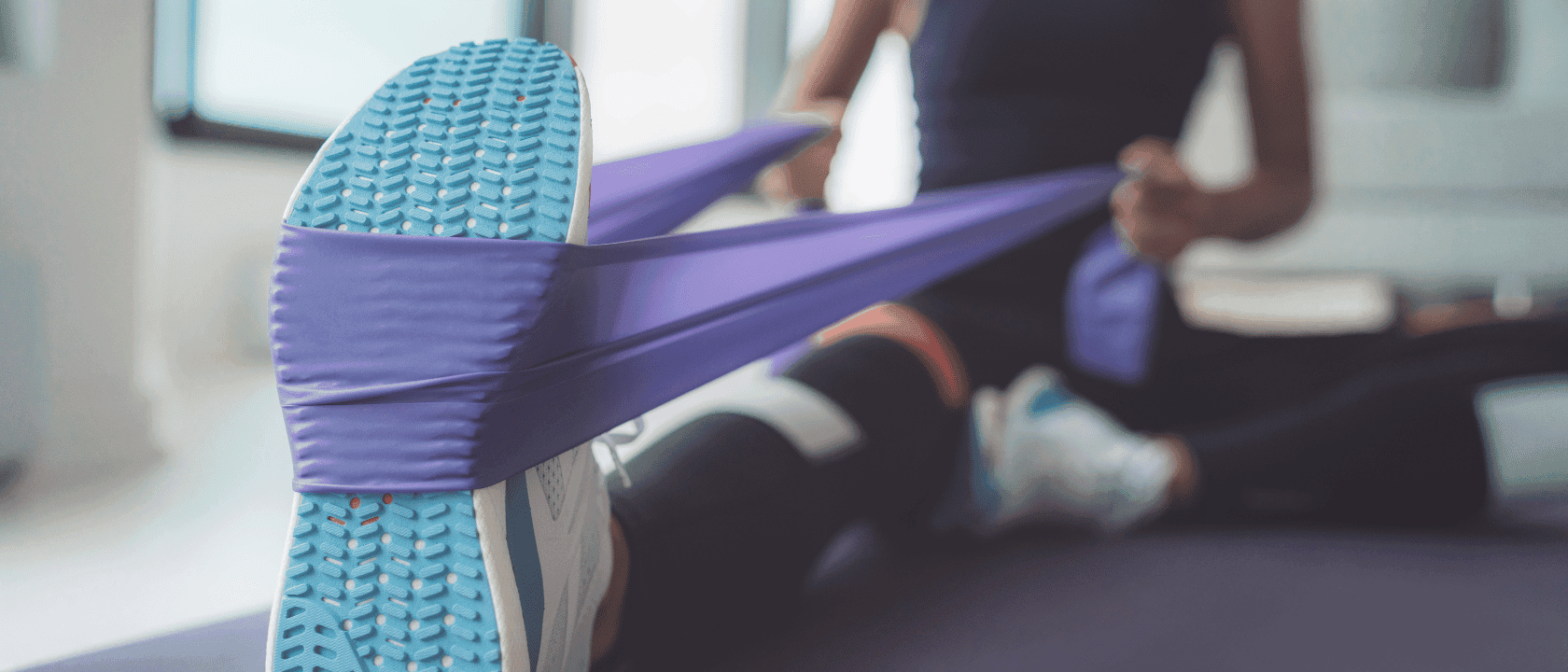
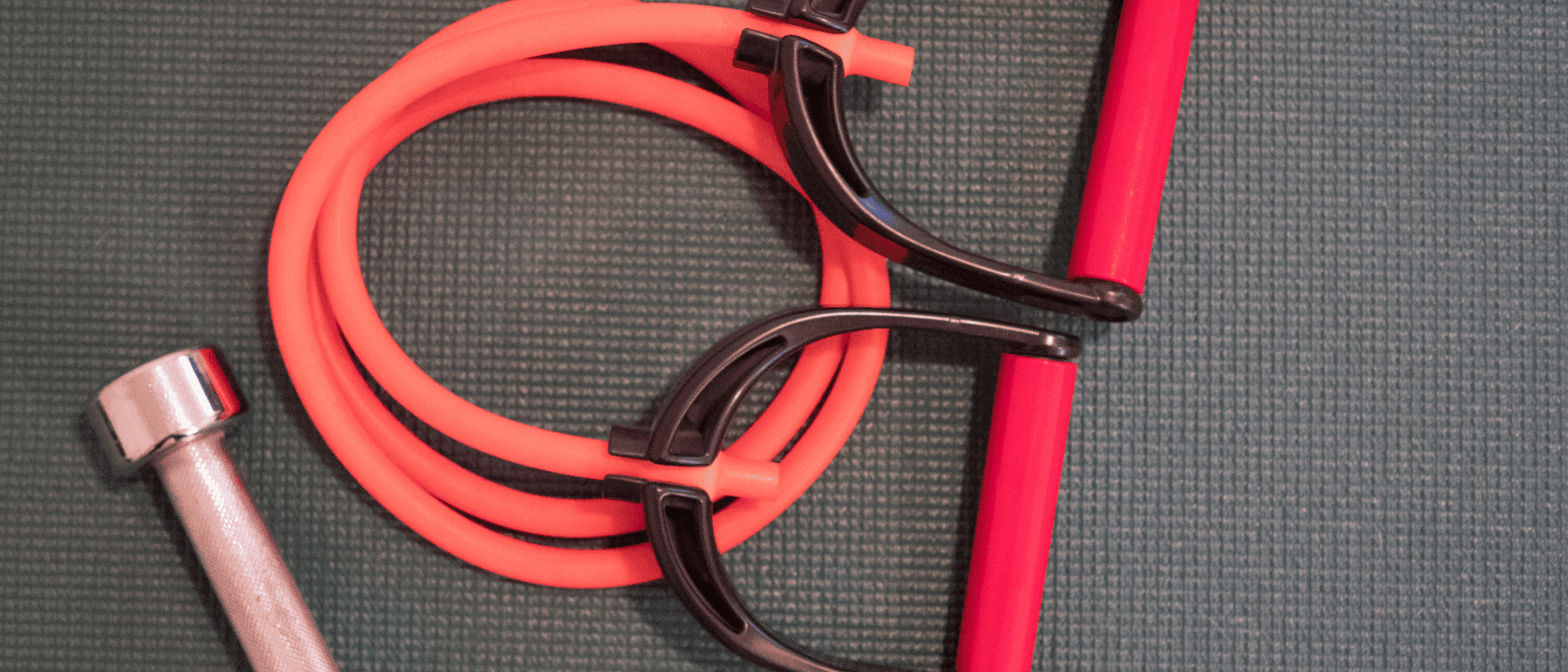
Practice all five movement patterns at home with varying resistance levels
Improve mobility before pattern practice and aid recovery after workouts
Perfect for learning hinge patterns with kettlebell swings and deadlifts
Add rotation pattern training with Russian twists and wood chops
Practice vertical pull patterns at home without permanent installation
Improve wrist alignment and depth during push pattern exercises
Comfortable padding for floor-based pattern practice and bodyweight exercises