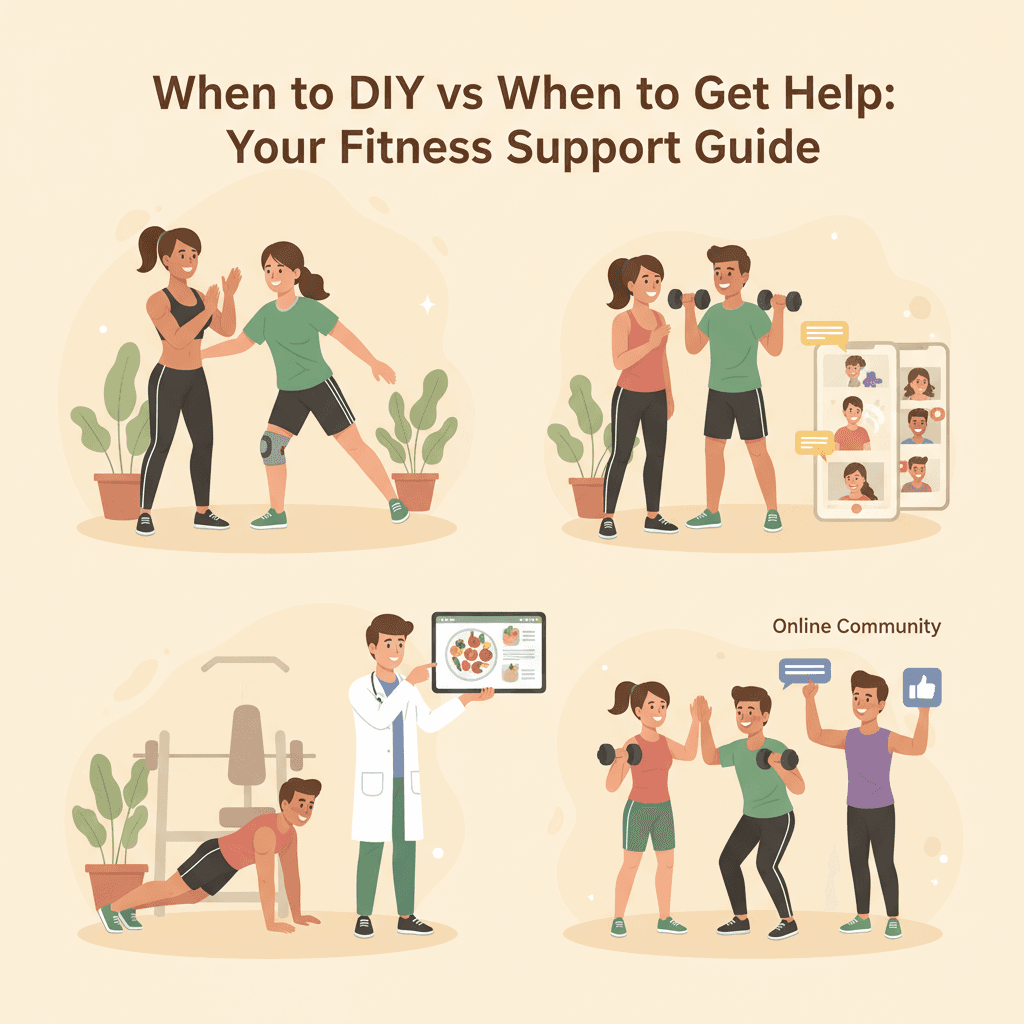
You don’t have to choose between an expensive trainer and going it alone. Support exists on a spectrum-from solo with good resources to one-on-one coaching-and picking the right level saves time, money, and injury risk.
The DIY Green Zone: When Solo Works
You Can Go Solo When:
You're Starting with Basic Movement
- Walking, jogging, swimming
- Basic bodyweight exercises
- Gentle stretching and yoga
- Following established beginner programs
You Have:
- No current injuries or health conditions
- Basic body awareness
- Ability to follow video instructions
- Patience to progress slowly
- Access to reliable resources
The Goal Is:
- General health and fitness
- Stress relief and mental health
- Building basic habits
- Exploring what you enjoy
When to Consider Some Guidance: Consider Some Guidance
Signs You'd Benefit from Help:
Physical Indicators:
- Persistent aches or pains during exercise
- Plateau lasting more than 3-4 weeks
- Confusion about proper form
- Previous injuries flaring up
- Unsure if soreness is normal
Mental/Emotional Indicators:
- Overwhelmed by conflicting information
- Losing motivation after initial enthusiasm
- Anxiety about gym environments
- All-or-nothing thinking patterns
- Comparing yourself constantly to others
Goal-Related Indicators:
- Specific performance goals (5K, pull-up)
- Body composition changes not happening
- Sport-specific training needs
- Limited time requiring efficiency
The Red Zone: Professional Help Needed
Get Professional Help Immediately For:
Medical/Physical:
- Sharp, shooting, or persistent pain
- Dizziness, chest pain, or breathing issues
- Recent surgery or injury
- Chronic health conditions
- Pregnancy or postpartum recovery
- Eating disorder history or signs
Form/Safety:
- Planning to lift heavy weights
- Complex movements (Olympic lifts)
- Return from long-term injury
- Youth or senior populations
- Significant mobility limitations
Types of Professional Support
Personal Trainers
Best for:
- Learning proper form
- Accountability and motivation
- Customized programming
- Pushing past comfort zones safely
Cost range: $30-150 per session Frequency: Weekly to monthly
Red flags to avoid:
- No certification
- One-size-fits-all approach
- Ignores pain or discomfort
- Focuses on selling supplements
- Makes unrealistic promises
Physical Therapists
Best for:
- Injury rehabilitation
- Movement dysfunction
- Chronic pain management
- Post-surgery recovery
- Corrective exercise
Cost range: Often covered by insurance Frequency: As prescribed
When to see one:
- Pain lasting >2 weeks
- Doctor referral
- Recurring injuries
- Movement limitations
Registered Dietitians
Best for:
- Medical nutrition needs
- Eating disorder recovery
- Sport-specific fueling
- Sustainable weight management
- Food allergy navigation
Not the same as:
- Nutritionists (less regulated)
- Fitness coaches giving diet advice
- Social media 'experts'
Group Fitness Instructors
Best for:
- Motivation through community
- Structured workouts
- Learning new exercise styles
- Accountability
- Social connection
Good for beginners:
- Classes labeled "beginner" or "all levels"
- Instructors who offer modifications
- Smaller class sizes
- Non-competitive atmosphere
The Budget-Friendly Middle Ground
Semi-Professional Options:
Small Group Training
- 2-4 people share trainer cost
- More affordable than 1-on-1
- Social support included
- Cost: $15-40 per person/session
Online Coaching
- Customized programs
- Weekly check-ins
- Form checks via video
- Cost: $50-200/month
Gym Floor Trainers
- Free with membership
- Basic form checks
- Equipment orientation
- Program suggestions
Student Clinics
- PT/training schools
- Supervised students
- Reduced rates
- Quality varies
Free Resources That Actually Help:
Step-by-step and community support
- FitJourney's HowTo content walks through common topics step by step. When you're in the DIY zone, it's a good place to start.
- FitJourney's Question and Answer space lets you ask and get answers from others on the same journey.
Quality YouTube Channels and Instagram Pages
- Look for certified professionals
- Consistent, research-based content
- Clear form demonstrations
- Modification options shown
Fitness Apps (Free Tiers)
- Structured programs
- Video demonstrations
- Progress tracking
- Community features
Reddit Communities
- r/fitness wiki
- Form check threads
- Beginner programs
- Supportive community
Local Resources
- Park district classes
- Community center programs
- Walking groups
- Library fitness DVDs
When to Change Support Levels
Start with More Help If:
- Complete beginner
- Injury history
- Specific goals
- Low confidence
- Need accountability
Reduce Support When:
- Confident in form
- Consistent routine established
- Understanding programming
- Self-motivated
- Budget constraints
Increase Support When:
- Plateau persists
- Goals change significantly
- Injury occurs
- Motivation wanes
- Ready for advanced techniques
Questions to Ask Professionals
Before Hiring Anyone:
Credentials:
- What certifications do you have?
- How long have you been practicing?
- Do you have insurance?
- Experience with my demographic/goals?
Approach:
- How do you customize programs?
- What's your training philosophy?
- How do you handle injuries/limitations?
- What does a typical session look like?
Logistics:
- Cost and package options?
- Cancellation policy?
- Session length and frequency?
- Between-session support?
Red Flags: When to Run
Avoid Professionals Who:
- Promise specific results in exact timeframes
- Push through pain
- Sell multi-level marketing products
- Use shame or negative motivation
- Don't ask about health history
- Copy cookie-cutter programs
- Aren't certified/credentialed
- Make you feel bad about yourself
Building a Support Network
A practical mix:
- Professional: For expertise and safety
- Workout Buddy: For accountability
- Online Community: For daily motivation
- Friends/Family: For lifestyle support
- Healthcare Team: For medical clearance
DIY + Support Hybrid Approach:
- Month 1-2: Professional help for foundation
- Month 3-4: Reduce to bi-weekly check-ins
- Month 5-6: Monthly form checks
- Ongoing: DIY with periodic tune-ups
The Workout Buddy Solution
Benefits of Partner Training:
- Accountability (86% more likely to stick with it)
- Safety spotter for weights
- Motivation and friendly competition
- Shared cost for trainer
- Social connection
Finding the Right Partner:
- Similar fitness level
- Compatible schedules
- Shared goals
- Reliable and committed
- Positive attitude
Support Decision Tree
-
Do I have pain or medical conditions?
- Yes → See doctor/physical therapist
- No → Continue to #2
-
Do I know what exercises to do?
- No → Consider trainer or classes
- Yes → Continue to #3
-
Am I confident in my form?
- No → Get professional form check
- Yes → Continue to #4
-
Am I seeing progress?
- No → Reassess program/get guidance
- Yes → Continue to #5
-
Am I staying motivated?
- No → Find accountability partner/group
- Yes → Keep doing what works!
The Bottom Line
You don’t have to choose between expensive one-on-one training and doing everything alone. A practical approach often mixes professional help for form and programming, community or a buddy for motivation, and solo practice for daily habits, with check-ins when you plateau or goals change. Asking for help is a strategy, not a weakness.