
How Often Should Beginners Work Out? The Goldilocks Zone
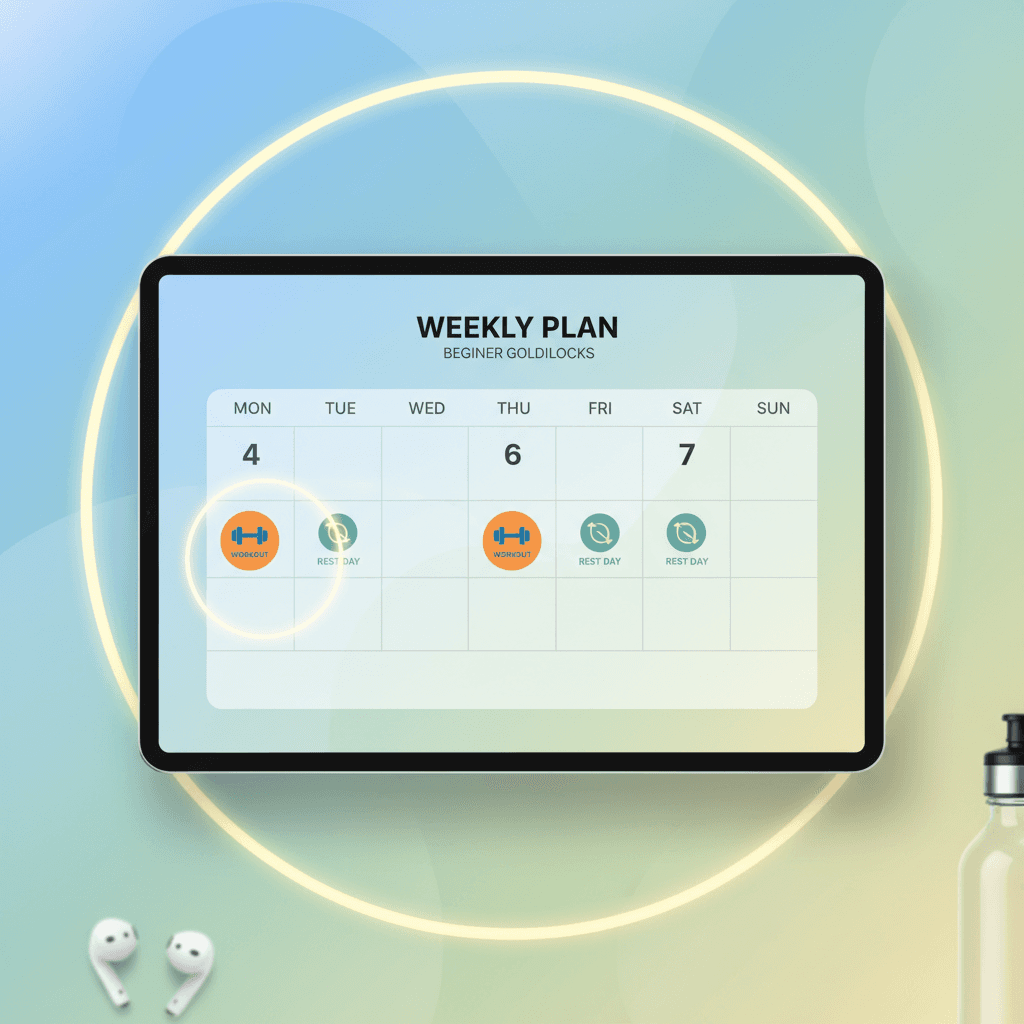
Calendar view showing optimal workout days marked with checkmarks, demonstrating a balanced weekly schedule
Key Takeaways
- Start with 2-3 workout days per week and build gradually - consistency beats intensity
- Rest days are when your body actually gets stronger through recovery and adaptation
- Listen to your body's signals and adjust frequency based on recovery, not ambition
#The Goldilocks Zone for Beginners
You don't need to work out every day to see results. In fact, beginners see optimal results with 3-4 workout days per week - the "just right" frequency that drives adaptation without leading to burnout.
#Why Rest Days Are Actually Training Days
Your body doesn't get stronger during workouts. It gets stronger during recovery. Every session creates tiny tears in muscle fibers; rest is when your body repairs them and comes back stronger. Skip recovery, skip the results.
#The Starter Schedule (Weeks 1-4)
Begin with 2-3 days per week on non-consecutive days:
- Monday: Full body workout
- Wednesday: Full body workout
- Friday: Optional light activity
This gives 48 hours between sessions for recovery and motivation to recharge. Consistency beats intensity every time.
#Progression Over Months
- Month 1: Establish the habit - 2-3 days/week
- Month 2: Build consistency - 3 days/week
- Month 3: Increase intensity or duration - 3-4 days/week
- Month 4-6: Find your sustainable rhythm
#Active Recovery vs. Full Rest
Rest days don't have to mean the couch. Active recovery (20-30 minute walks, gentle yoga, easy bike rides) supports progress - as long as activities feel refreshing, not exhausting. If you're breathing hard or sweating significantly, it's not recovery.
Full rest days: Complete break from structured exercise; focus on mobility, sleep, and nutrition.
Gear for this article
Curated tools & essentials mentioned in this guide



#Warning Signs You're Overdoing It
Listen for these overtraining signals:
- Persistent muscle soreness lasting more than 72 hours
- Declining performance despite consistent effort
- Frequent minor injuries or "tweaks"
- Dreading workouts you used to enjoy
- Constant fatigue or irritability
If multiple signs appear, dial back. A recovery week won't undo your progress.
#Making Sessions Count
Three focused workouts beat seven half-hearted ones. Quality markers for each session:
- Focus on form over speed
- Rest 60-90 seconds between sets
- Stay present - no scrolling mid-workout
- Track progress to stay motivated
#Time-Crunched? Two Days Works
If you can only manage 2 days per week:
- Focus on compound movements (squats, push-ups, rows)
- Increase daily movement - stairs, walking meetings, short walks
During high-stress periods (exams, deadlines), reduce frequency but maintain consistency and use exercise as stress relief rather than added pressure.
#Finding Your Personal Frequency
The right frequency balances:
- Recovery capacity - age, stress, sleep, nutrition
- Goals - general health vs. performance targets
- Schedule - be realistic
- Enjoyment - sustainability requires it
- Other activities - sports, physical work, active hobbies
#The Bottom Line
Start with 2-3 days per week. Build the habit first, then adjust. The best schedule is the one you actually follow.
Recommended Gear
Essential tool for rest days to reduce soreness and speed muscle recovery
Track your workout frequency and ensure proper rest day scheduling
Monitor readiness to train and optimize your workout frequency based on data
Speed up recovery between workout days for consistent training frequency
Dedicated space for rest day stretching and gentle mobility work
Perfect for 2-3 weekly home workouts when starting your fitness routine
Monitor sleep quality to ensure proper recovery between workout sessions