
Exercise With Health Conditions: Your Personalized Playbook
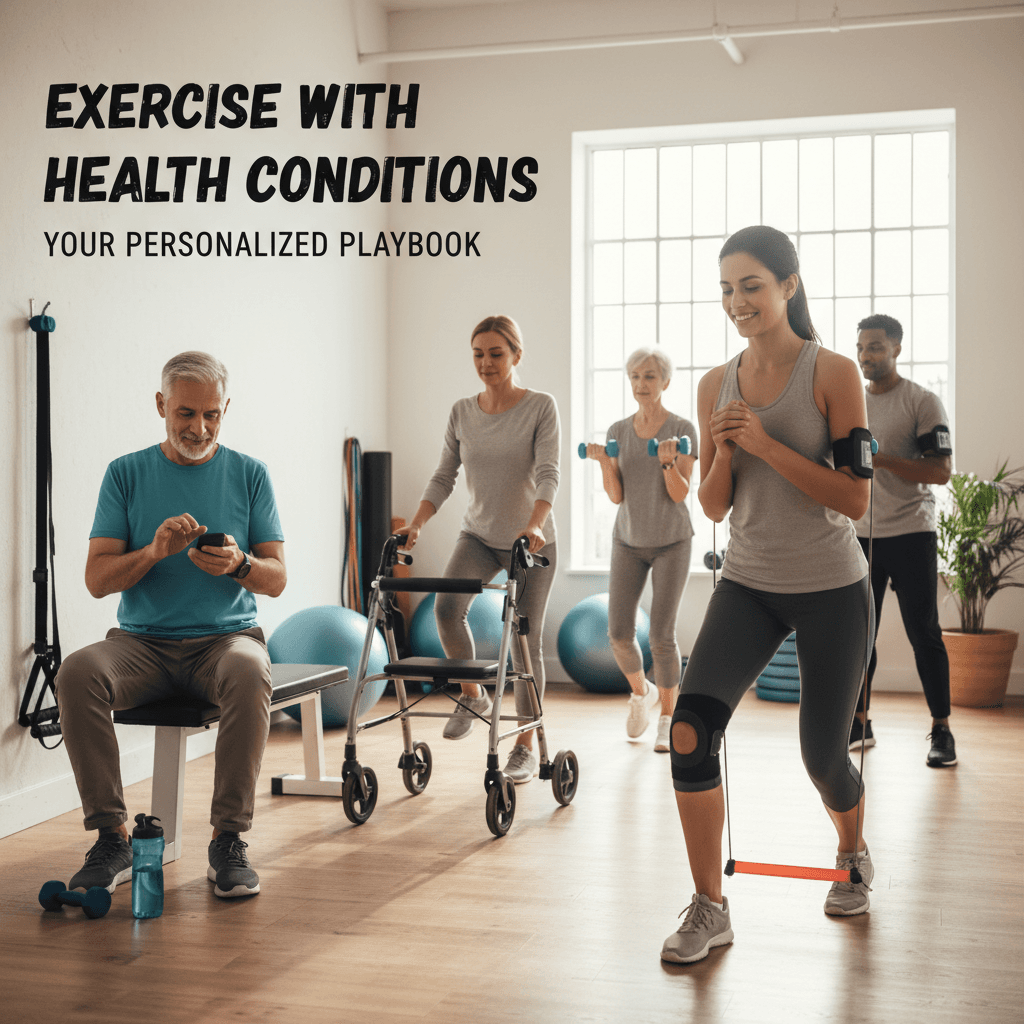
Diverse group of people with various health conditions exercising together in a supportive gym environment
Key Takeaways
- Always get medical clearance before starting exercise with any health condition
- Adapt exercises to your specific limitations rather than avoiding movement entirely
- Track symptoms alongside workouts to identify patterns and optimize your program
Having a health condition doesn't mean exercise is off the table - often it's when movement matters most. The key is knowing how to adapt safely.
#Get Medical Clearance First
Before changing your activity level, get medical clearance from your doctor. This is medically necessary - not just a legal formality. A doctor can tell you which exercises are safe, what to avoid, how to monitor your response, and how exercise may interact with your medications.
#Condition-Specific Adaptations
#High Blood Pressure
- Start with moderate cardio: walking, swimming, cycling
- Do strength training with lighter weights and more reps - strength training is not off-limits
- Avoid holding your breath (Valsalva maneuver) and exercises where your head goes below your heart
- Red flags: chest pain, severe headache, vision changes - stop immediately
#Type 2 Diabetes
- Check blood sugar before, during (if over 30 min), and after exercise
- Keep fast-acting carbs (glucose tabs, juice box) handy at all times
- Both cardio and strength training improve insulin sensitivity
- Red flags: blood sugar below 70 or above 250 mg/dL - address before exercising
#Arthritis
- Prefer low-impact activities: swimming, water aerobics, cycling
- Warm up longer; exercise during your best time of day
- Strength training protects joints by building supporting muscle
- Red flags: sharp pain, significant swelling, hot joints - rest day
#Chronic Back Pain
- Build core stability before heavy lifting
- Walking is surprisingly effective
- Red flags: numbness, tingling, or loss of bladder control = immediate medical attention
#Anxiety and Depression
- Exercise is proven as effective as some antidepressants for mild-to-moderate depression
- Start small - even 10 minutes counts on hard days
- Never stop psychiatric medications without medical supervision
Gear for this article
Curated tools & essentials mentioned in this guide


#Five Universal Adaptation Principles
- Start lower than you think - cut your starting point in half; you can always build up
- Progress slower than others - 5% weekly increases instead of 10% is smart, not failure
- Listen harder to your body - the "no pain, no gain" mentality does NOT apply to health conditions; discomfort is ok, pain is not
- Plan for bad days - have a Plan B workout and a "rest is best" protocol for flares
- Track everything initially - log exercise type, how you felt, symptoms, energy, and sleep to optimize your program
#Build a Healthcare Team
You don't have to figure this out alone. Consider:
- Physical therapist - movement assessment and exercise prescription
- Certified personal trainer with medical exercise certification - ongoing guidance
- Registered dietitian - align nutrition with exercise and condition management
- Mental health professional - for conditions affecting motivation or causing exercise anxiety
#Your Action Plan
- This week: Schedule a doctor visit for exercise clearance
- While waiting: Start tracking current activity and symptoms
- After clearance: Begin at 50% of what feels manageable
- Weeks 2-4: Establish consistency before increasing intensity
- Ongoing: Regular check-ins with your healthcare team
Your path includes more checks and modifications - but with the right approach, movement is safe and valuable. Start where you are, use what you have, do what you can.
Recommended Gear
Safe adaptable strength training at home with adjustable resistance levels for any fitness level
Track workouts alongside health conditions to identify patterns and optimize your program
Track blood pressure response to exercise for those managing hypertension with activity
Essential for diabetics to check blood sugar before, during, and after exercise sessions
Full-body workout routines for those with mobility limitations or balance concerns
Low-impact pool exercise gear for joint-friendly workouts that reduce arthritis pain
Essential safety item for diabetics exercising to quickly address low blood sugar episodes