
Exercise and Mental Health: What the Research Shows
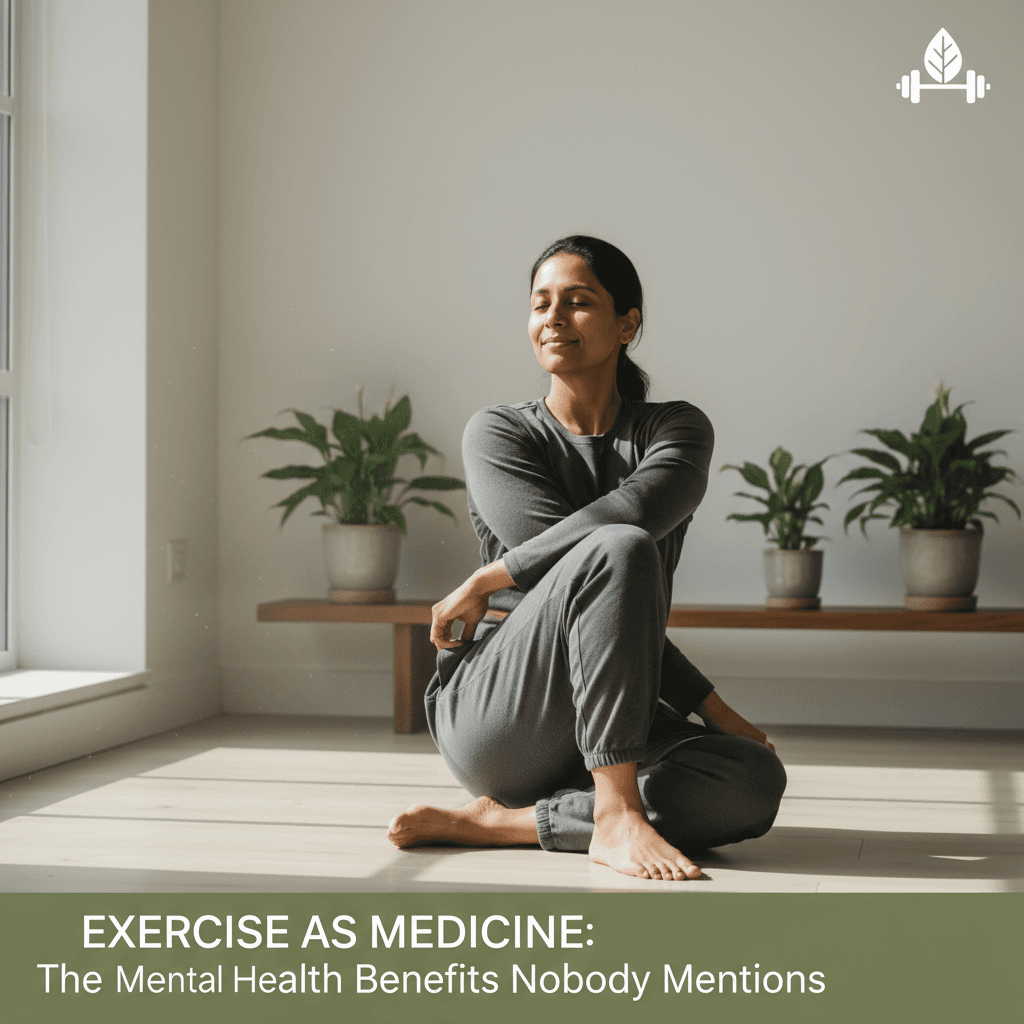
Person doing yoga in a peaceful setting with visible stress relief elements like calm facial expression and relaxed posture
Key Takeaways
- Just 20 minutes of moderate exercise can reduce anxiety symptoms for up to 12 hours
- Exercise triggers the same brain chemicals targeted by antidepressant medications, but naturally
- Consistency matters more than intensity - daily 15-minute walks beat sporadic intense workouts for mental health
Exercise is one of the most effective tools for mental health - not just a short-lived mood boost, but lasting effects on anxiety, depression, and stress.
#Brain Chemistry
- BDNF: Supports new brain cells and protects existing ones, especially in memory and mood areas
- Endorphins: Natural painkillers and stress relievers; improve sleep and stabilize mood for hours
- Serotonin and dopamine: Same neurotransmitters targeted by antidepressants - but without side effects
#Anxiety
When you exercise, heart rate and breathing increase - similar to anxiety. In a workout context your brain learns these sensations are safe, which reduces nervous system reactivity over time. Just 20 minutes of moderate exercise can reduce anxiety symptoms for up to 12 hours.
#Depression
Regular exercise can be as effective as medication for mild to moderate depression through: structure and purpose, social connection, self-efficacy from hitting goals, and better sleep. Exercise does not replace professional mental health care when needed - it's a strong addition.
Gear for this article
Curated tools & essentials mentioned in this guide



#Stress
Modern stressors trigger a physical stress response that evolved for physical threats. Exercise completes the stress cycle: cortisol regulation, nervous system balance, resilience building. Walking can increase creative output by up to 60%.
#When Motivation Is Low
- Start ridiculously small (a 2-minute walk) - success builds momentum
- Lower the bar: imperfect exercise beats perfect exercise you don't do
- Time it right: morning exercise often sets a positive tone for the whole day
- Track mood before and after - the data becomes its own motivation
Active people have 20-30% lower risk of depression and anxiety. Consistency beats intensity - daily 15-minute walks outperform sporadic intense workouts for mental health.
Recommended Gear
Comfortable cushioning for stress-relief exercises like yoga and stretching at home
Track activity and monitor stress levels throughout the day to see how exercise impacts your mood
Gentle resistance training at home for mood-boosting workouts without needing a gym
Get aerobic exercise for anxiety reduction without leaving your home on tough mental health days
Comfortable seating for combining mindfulness practice with your exercise routine for mental wellness
Science-backed guide to using movement as medicine for depression, anxiety, and stress management
Listen to mood-boosting music or guided meditations during your stress-relief workouts