Macronutrients
Understanding macronutrients is one of the most practical foundations of good nutrition. Every meal you eat is built from three core components - fat, protein, and carbohydrate - and each plays a distinct role in your body. This guide breaks down what you actually need to know about each one.
#Healthy Fats
Fat is an essential macronutrient - the goal isn't to cut it, it's to choose the right types.
The 3 types
| Type | Examples | Guidance |
|---|---|---|
| Unsaturated (mono & poly) | Olive oil, avocado, nuts, oily fish | Prioritise |
| Saturated | Butter, red meat, coconut oil, full-fat dairy | Moderate |
| Trans fats | Hydrogenated oils, many packaged snacks | Avoid |
Why fat matters
- Absorbs fat-soluble vitamins (A, D, E, K)
- Supports hormone synthesis
- Provides sustained energy and satiety
- Protects cardiovascular and brain health
Best sources
- Oily fish: salmon, mackerel, sardines (aim for 2× per week)
- Avocado: ~½ per serving is a practical portion
- Extra-virgin olive oil: use for dressings and low-heat cooking
- Nuts and seeds: almonds, walnuts, chia, flaxseed
Reading a label
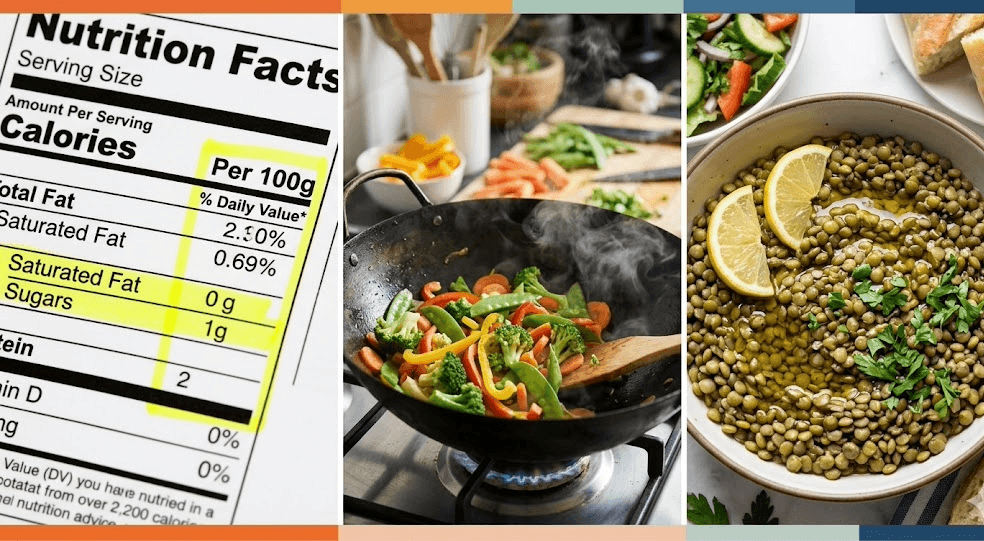
Check saturated fat per 100g - under 5g is a reasonable benchmark for everyday staples. In the ingredients list, "partially hydrogenated oil" signals trans fats.
Simple swaps
- Butter on toast → avocado or nut butter
- Processed snack → small handful of mixed nuts
- Vegetable/seed oil → extra-virgin olive oil
#Lean Protein
Protein supports muscle repair and growth, immune function, satiety, and enzyme production. Most people underestimate their daily need or cluster intake at dinner.
Daily targets
| Activity level | Target |
|---|---|
| Moderately active | 1.2-1.6g per kg body weight |
| Active / training regularly | 1.6-2.2g per kg body weight |
| Older adults (60+) | ≥1.6g per kg (muscle preservation priority) |
Example: a 70 kg moderately active person needs roughly 84-112g per day.
Best lean sources
- Chicken breast: ~31g per 100g
- Tuna / salmon: ~25-28g per 100g
- Eggs: ~6g each
- Cottage cheese / Greek yoghurt: 11-17g per 100g
- Lentils / chickpeas: ~9g per 100g (cooked)
- Tempeh: ~19g per 100g
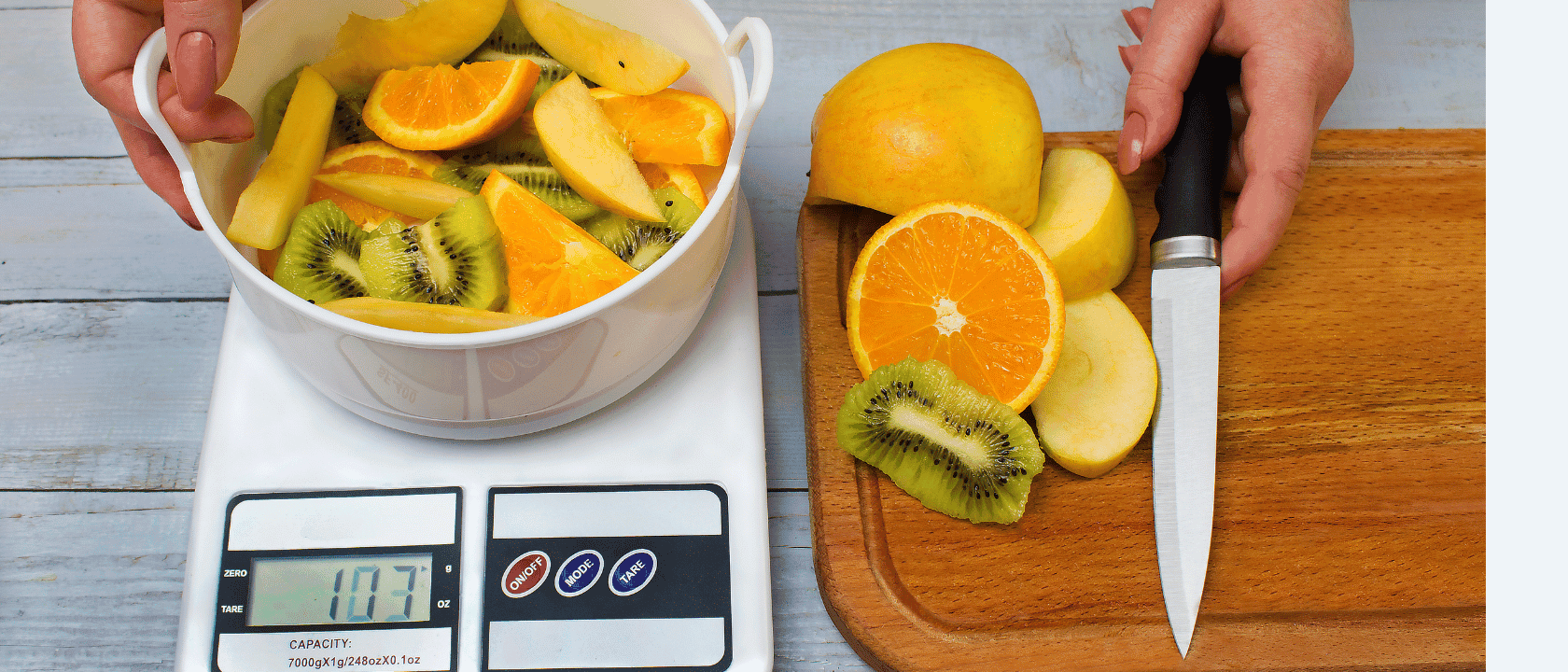
Portion anchor (no scale needed)
- Palm of your hand ≈ 25-30g (chicken, fish, beef)
- 2 large eggs ≈ 12g
- 200g Greek yoghurt ≈ 17g
- 2 heaped tbsp nut butter ≈ 7g
Distribution matters
Research suggests muscle protein synthesis is optimised at around 25-40g per meal. Spreading intake across 3-4 meals is more effective than a single large hit at dinner.
Gear for this post
Curated tools & essentials mentioned in this guide


#Fibre
The UK average fibre intake is around 18g per day - well short of the recommended 30g. Fibre isn't glamorous, but it's one of the most evidence-backed nutrients for long-term health.
Two types - both important
| Type | What it does | Best sources |
|---|---|---|
| Soluble | Slows digestion, lowers LDL, feeds gut bacteria | Oats, apples, legumes, flaxseed |
| Insoluble | Adds bulk, keeps gut transit regular | Wholegrains, vegetable skins, nuts |
Why it matters
- Feeds beneficial gut bacteria (prebiotic effect)
- Slows glucose absorption → steadier blood sugar and energy
- Lowers LDL ("bad") cholesterol
- Promotes satiety between meals
- Associated with reduced colorectal cancer risk
High-fibre foods (per typical serving)
- Lentils 100g cooked - 8g
- Chia seeds 15g - 5g
- Apple with skin - 4g
- Oats 40g dry - 4g
- Almonds 30g - 3.5g
- Broccoli 80g - 2.5g
- Wholegrain bread (1 slice) - 2g
What 30g looks like in a day
- Breakfast: porridge + chia + berries (~8g)
- Lunch: lentil soup + wholegrain roll (~10g)
- Dinner: veg stir-fry + brown rice (~8g)
- Snacks: apple + handful of almonds (~6g)
Build up gradually
Adding fibre too quickly causes bloating and discomfort. Increase by ~5g per week and drink more water - fibre needs fluid to do its job.
Enjoyed this guide? Share it with others.
More from the blog
Continue your learning journey with these guides.