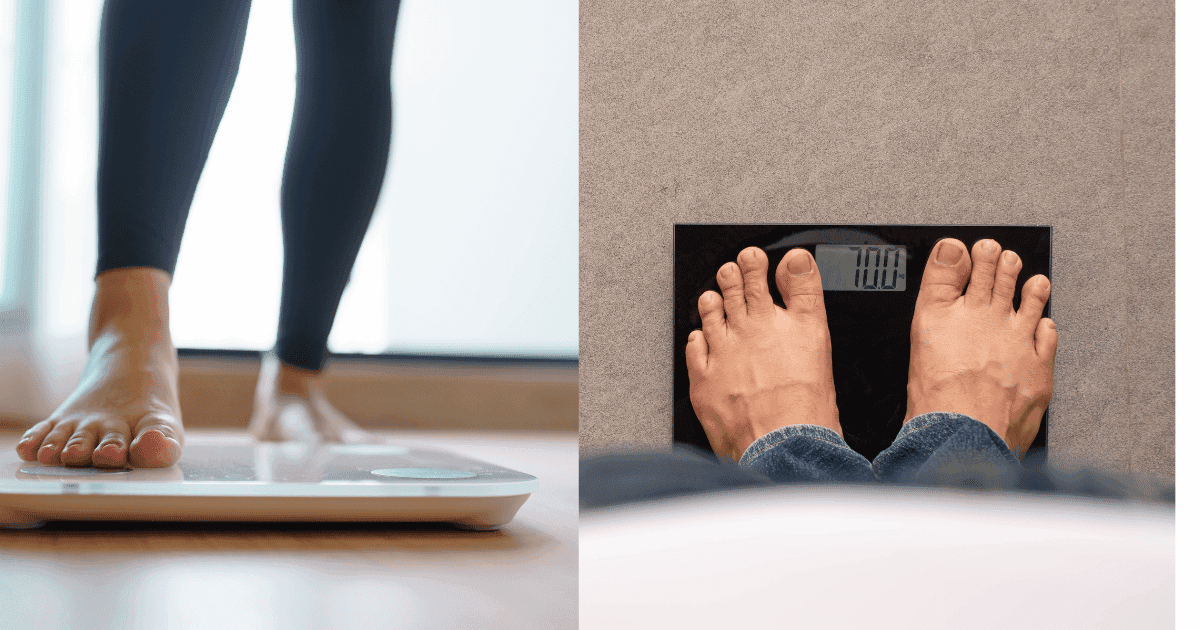
The FitJourney Science of Weighing

We weigh often because scale weight is noisy but still one of the clearest feedback loops for energy balance. That only works if you know what the number means - start with Understanding Scale Weight if day-to-day swings still feel personal.
#Why weigh continuously
Your body is not a fixed machine. Hydration, sodium, training, digestion, and hormones shift the reading between days and even within a day. More readings under similar conditions give you a clearer picture than a single weigh-in every few weeks, where you might catch a high or low by accident.
Weighing is a way to stay objective about the dataset you are working with - not a verdict on effort or worth.
#Keep conditions comparable
Pick one or two routines and stick to them. Examples:
- Morning, after bathroom, before food or drink
- Same slot mid-day on rest days
- Evening after the same clothing routine (less ideal, but fine if consistent)
Use the same scale, flat floor, and similar hydration when you can. Label the slot in your log so you compare like with like.
You may log more than once per day in those slots. FitJourney is built for that when each entry uses the same routine.
#Weekly trend and ticks
Weekly trend summarizes the week.
Within the week: Tick the first reading of the week. For each later reading that week, tick only if it beats your last tick (see table). Leave prior ticks unchanged.
Week on week: Write your last tick in Weekly trend at end of week. Tick week 1; for later weeks, tick Weekly trend only when it beats your last ticked weekly trend.
| Goal | Beat your last tick when the reading is… |
|---|---|
| Weight loss | Lower |
| Lean bulk | Higher |
| Maintenance | Closer to your goal weight (distance only; above or below does not matter) |
Goal weight comes from your plan. If two readings tie on distance from goal during maintenance, use the lower reading.
You are filtering noise so week-over-week change stays readable.
#Read the trend (week on week)
Compare this week's weekly trend to last week's (or use a two-week window if travel or illness added noise). You want weekly trends moving in the direction your plan expects.
| Situation | What to do |
|---|---|
| Trend matches plan | Stay the course |
| Flat for 1-2 weeks | Normal - check adherence and sleep before big changes |
| No movement in the expected direction for more than 2 weeks with consistent logging | Contact FitJourney Support for analysis |
Do not chase every upward tick with crash dieting or extra punishment workouts. Adjust food or activity modestly, or ask for help - the long arc of the journey beats single detours.
Gear for this post
Curated tools & essentials mentioned in this guide
#When to weigh less often
If stepping on the scale repeatedly outside your routine because you dislike the number, or if tracking drives mood swings or restriction, weigh less often and talk to a clinician or dietitian. Structured logging is a tool; anxiety is a signal to change the tool or get support.
For three-week worked grids (loss, bulk, maintenance), see Weight Log Example Records.
Print a Weight Log or read Understanding Scale Weight for why daily noise is normal.
Enjoyed this guide? Share it with others.
More from the blog
Continue your learning journey with these guides.